.jpg)
Can Australian Natives Create a Truly Formal Garden?
When people think of formal gardens, images of clipped box hedges, European avenues, perfectly symmetrical parterres, and stately estates often come to mind.
For decades, Australian native plants were overlooked in formal garden design. Many gardeners believed natives were best suited to bushland settings, cottage gardens, or naturalistic landscapes. Yet that assumption has limited how these plants are seen. Nothing could be further from the truth.
In fact, many Australian native plants suit formal gardens exceptionally well. They can be clipped into precise hedges, trained as standards, shaped into topiary, pleached into elegant screens, and repeated throughout a landscape to create the structure and symmetry that define classic formal design. That versatility is what makes them so effective.
The bonus?
Unlike many traditional European species, Australian natives are often better adapted to our climate, more drought-tolerant and resilient to local conditions, while also attracting native birds, bees and beneficial insects. In Australian conditions, they can also deliver better overall garden performance than many European species.
The secret to a successful formal garden isn't where the plants come from. It's how they're used because structure matters more than origin.
As many experienced landscape designers will tell you:
"Formal gardens are built on structure first and plants second."
The strongest formal gardens rely on repetition, balance, geometry, and carefully chosen plants that respond well to pruning and shaping. With those principles in mind, let's explore some of Australia's best native plants for creating elegant formal gardens.
Let's explore some of Australia's best native plants for creating elegant formal gardens.


Hedging & Topiary Plants
Lilly Pilly (Acmena smithii Minor)
The undisputed champion of Australian formal gardens. Dense foliage, rapid growth, and excellent response to pruning make Lilly Pillys ideal for formal hedges, topiary balls, cubes, spirals, and screening. Modern cultivars offer improved psyllid resistance and compact growth habits.
Designer Tip: Use repeating clipped Lilly Pilly spheres along pathways to instantly introduce a sense of formality and rhythm.
Standard Lilly Pilly (Syzygium australe Standard)
For a more architectural look, Standard Lilly Pillys bring height, structure and symmetry to formal gardens. Trained with a clear trunk and a dense, clipped canopy, they are ideal for entrances, pathways, courtyards and symmetrical feature planting, while their evergreen foliage provides year-round colour and structure. Regular pruning keeps the crown compact and beautifully defined, making them a great Australian alternative to traditional European-style standard trees.
Designer Tip: Use a matching pair of Standard Lilly Pillys on either side of an entrance, gate or pathway to create instant symmetry and a strong formal statement.
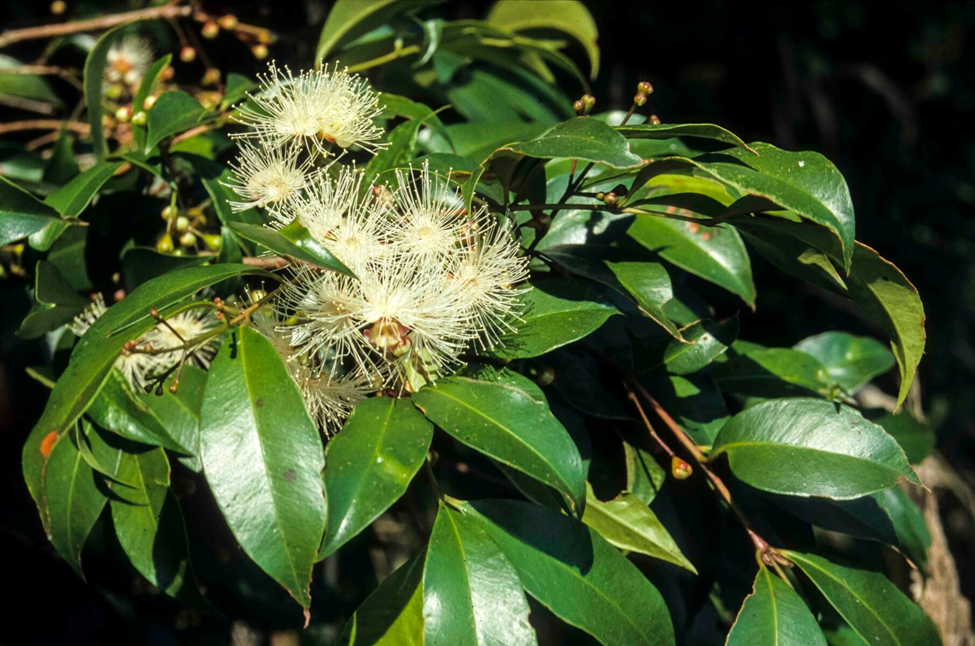
Brush Cherry (Syzygium paniculatum)
A close relative of the Lilly Pilly with smaller leaves and naturally dense growth. It clips beautifully and is often used where a finer, more refined appearance is desired.
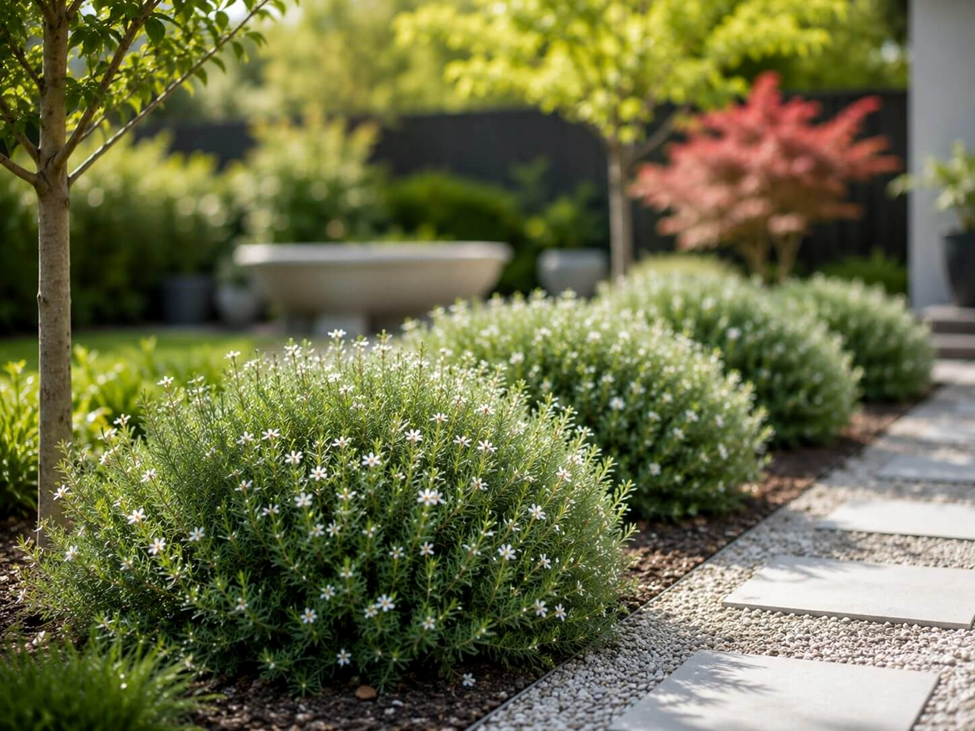
Coastal Rosemary (Westringia fruticosa)
Often described as Australia's answer to English box hedging. Its soft grey-green foliage creates a sophisticated look while tolerating drought, coastal exposure, and heat far better than traditional box plants. And it’s not the only Westringia suited to formal garden design – compact varieties such as Westringia ‘Zena’ (Dwarf Coastal Rosemary) and Westringia ‘Mundi’ are also excellent choices for creating neat, structured planting.
Lemon Myrtle (Backhousia citriodora)
Not only does it create an attractive hedge, but the aromatic foliage releases a refreshing citrus fragrance whenever brushed against.
Grey Myrtle (Austromyrtus dulcis)
Perfect for lower borders and smaller formal gardens where a compact clipped hedge is required.
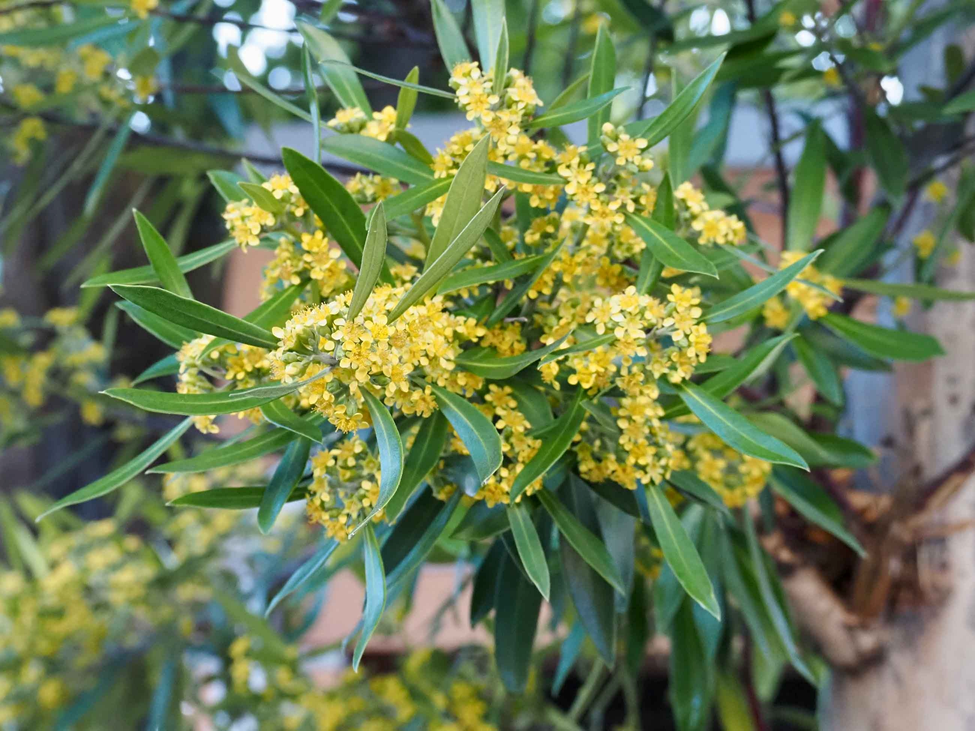
Standard & Pleached Trees
Formal gardens often rely on trees to create height, structure, and visual balance. With that role in mind, the following native trees work especially well in formal settings.
Weeping Lilly Pilly (Waterhousea floribunda)
Elegant and graceful, with attractive pendulous foliage that softens hard landscaping while maintaining a formal framework.
Water Gum (Tristaniopsis laurina)
One of Australia's finest candidates for pleaching and avenue planting. Its attractive bark provides year-round interest.
Native Frangipani (Hymenosporum flavum)
Highly fragrant flowers and a naturally symmetrical shape make this a standout feature tree.
Brush Box (Lophostemon confertus)
Ideal for larger properties requiring strong architectural structure and long-term canopy development.
Queensland Brush Cherry (Syzygium moorei)
A magnificent rainforest species that can become a stunning formal specimen tree.
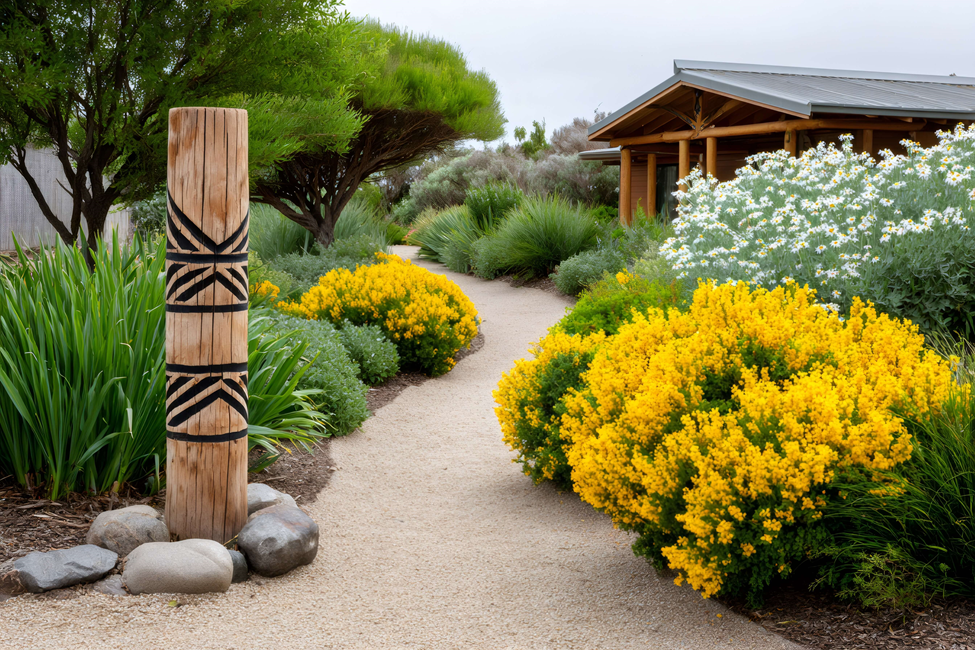
Gardener's Tip: Think in Layers
One of the biggest mistakes homeowners make is focusing on individual plants rather than the overall structure. To avoid that, successful formal gardens often follow a simple formula: Tall trees → clipped hedges → repeating shrubs → groundcovers.
Successful formal gardens often follow a simple formula:
Tall trees → clipped hedges → repeating shrubs → groundcovers
By layering plants in this way, the garden develops depth, cohesion, and year-round visual interest.
Border & Edging Plants
Native Violet (Viola hederacea)
An excellent edging plant for shaded paths and garden beds.
Kidney Weed (Dichondra repens)
Creates a lush carpet effect and is often used between stepping stones or as a lawn alternative.
Casuarina glauca ‘Cousin It’ (Casuarina glauca ‘Cousin It’)
A hardy groundcover with cascading, mop-like foliage. Ideal for pots, hanging baskets, rockeries, and retaining walls. Drought-tolerant, low-maintenance, and perfect for adding texture all year-round.
Myoporum (Myoporum parvifolium)
A hardy, reliable groundcover ideal for large-scale mass planting.
Brachyscome (Brachyscome multifida)
Provides soft texture and long flowering periods while maintaining a tidy appearance.
Native Daisy Cultivars (Brachyscome spp.)
Excellent for creating repeating drifts of colour throughout formal planting schemes.
Statement Plants & Focal Points
Every formal garden needs focal points. These are the plants that draw the eye and create visual anchors throughout the landscape. After the structural layers, these standout plants bring the design together.
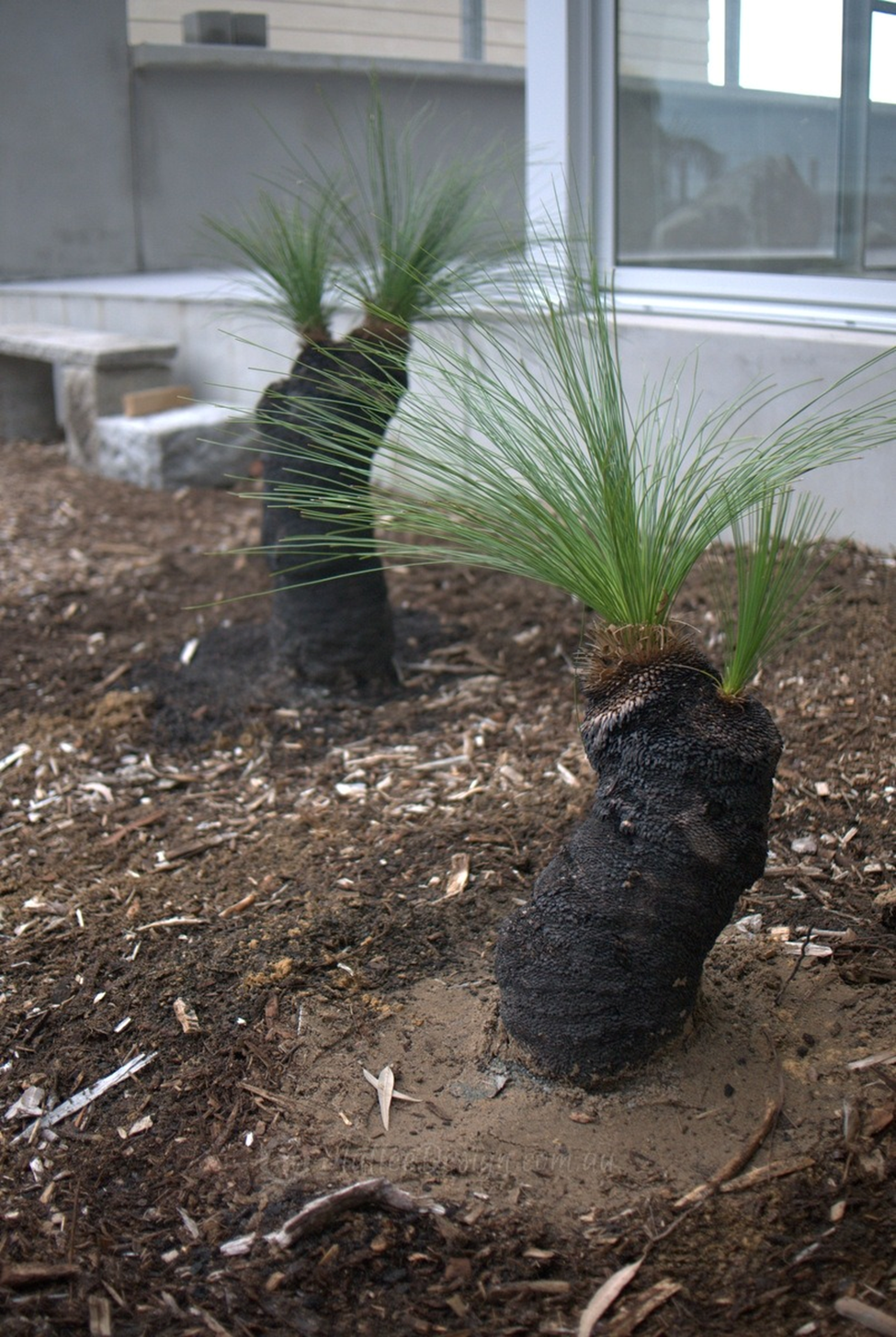
Grass Tree (Xanthorrhoea spp.)
Perhaps Australia's ultimate living sculpture. A mature Grass Tree instantly becomes a centrepiece and works beautifully in both contemporary and traditional formal gardens.
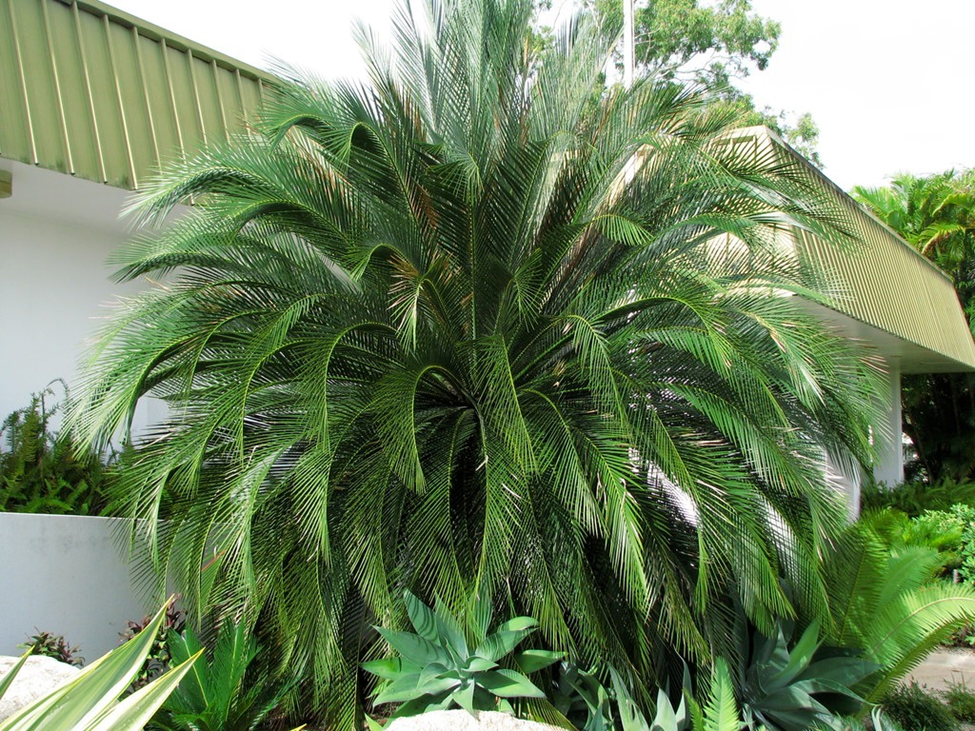
Macrozamia (Macrozamia communis and related species)
With perfectly symmetrical crowns and ancient lineage, cycads naturally complement formal design principles.
Blueberry Ash (Elaeocarpus reticulatus)
Elegant foliage, decorative flowers, and manageable size make it a refined specimen tree.
Queensland Bottle Tree (Brachychiton rupestris)
Its distinctive swollen trunk creates a bold architectural statement.
Illawarra Flame Tree (Brachychiton acerifolius)
Spectacular seasonal colour makes it ideal as a feature tree in larger formal landscapes.
Gardener's Tip: Repetition Creates Luxury
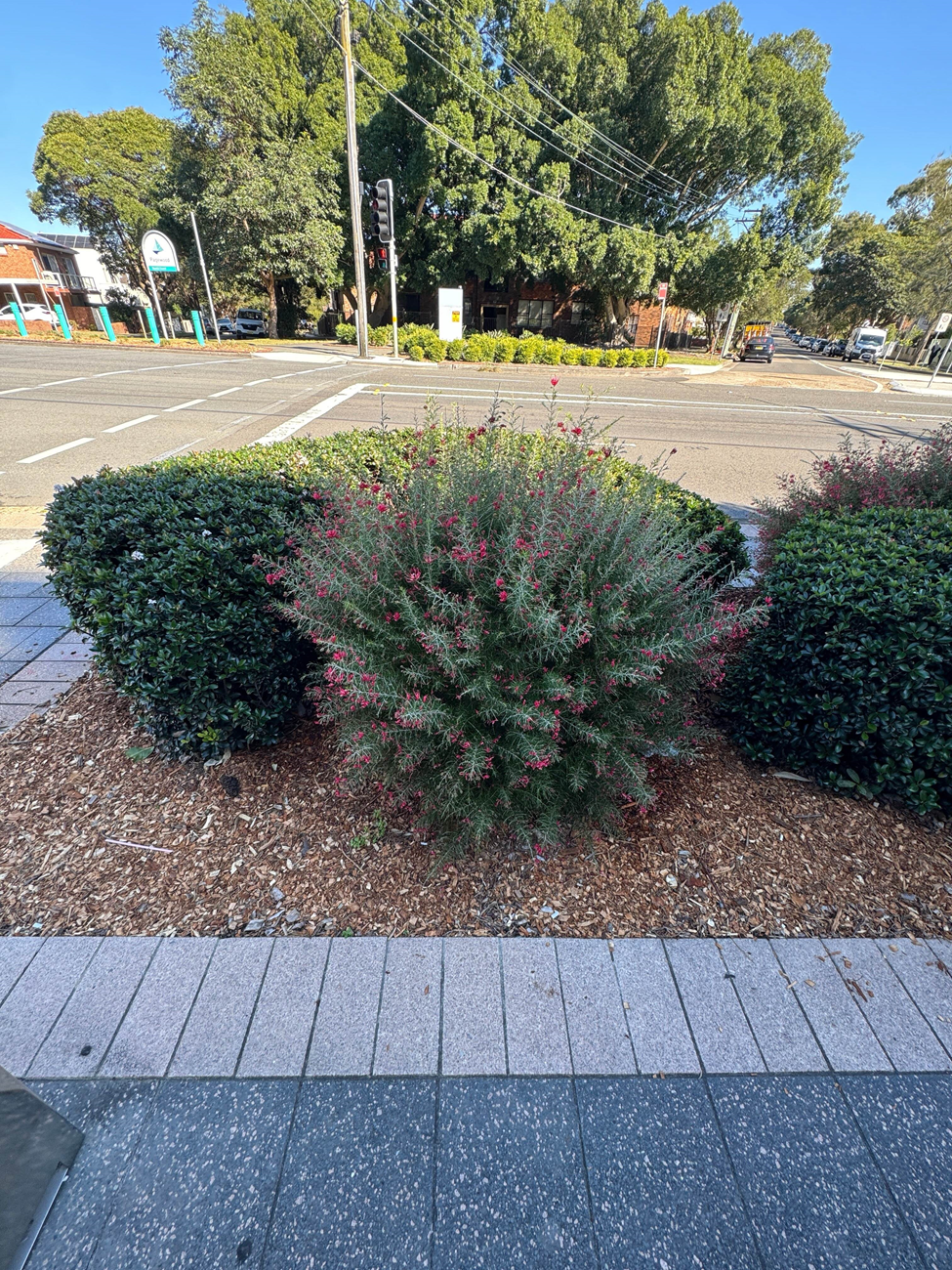
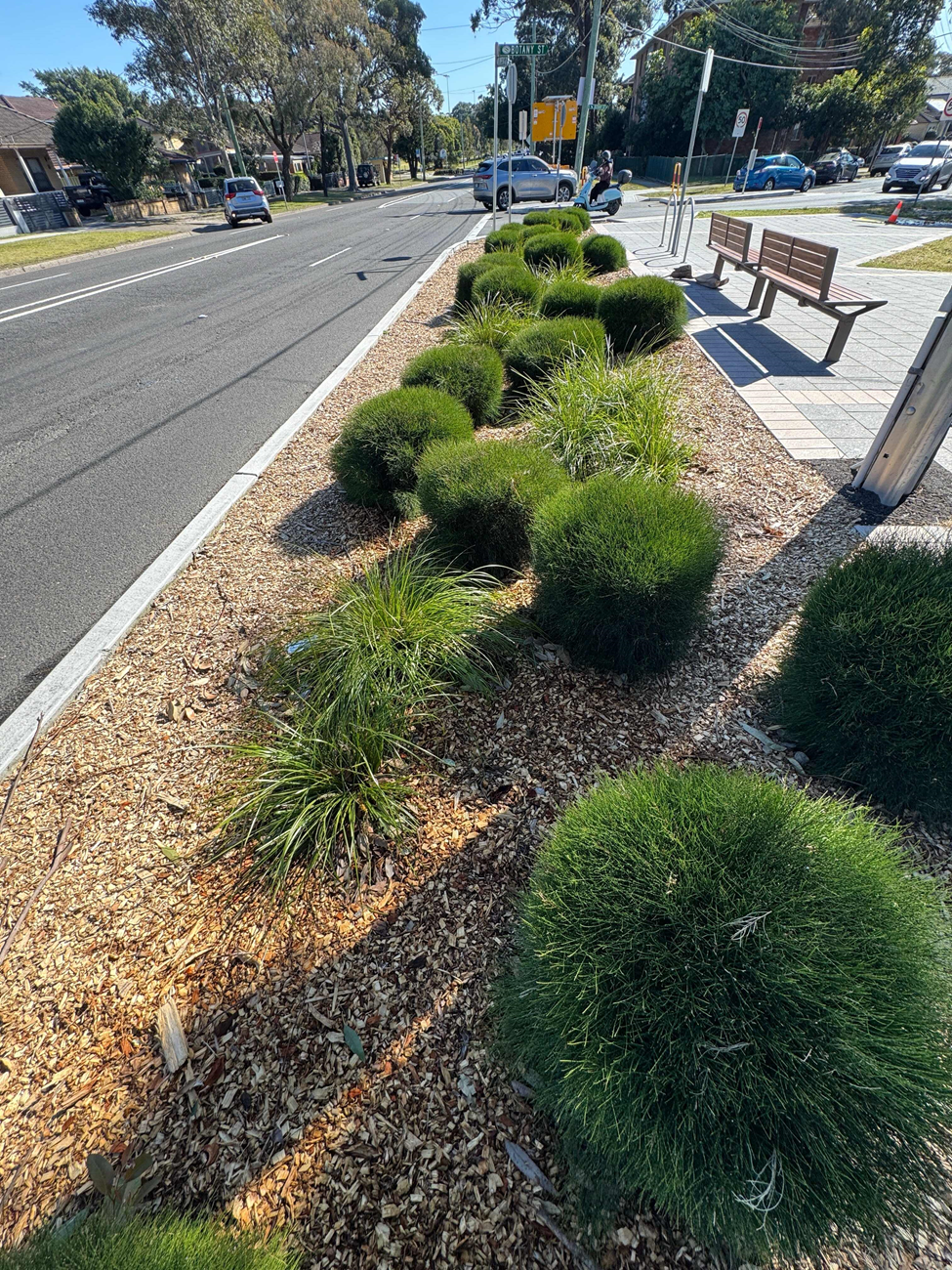
Many people assume expensive gardens are defined by rare plants. In reality, the most luxurious gardens often use fewer plant species repeated consistently throughout the landscape.
Repeating the same hedge, groundcover, or feature plant creates unity and instantly makes a garden feel professionally designed.
Climbers & Vertical Features
Native Wisteria (Hardenbergia violacea)
A fantastic native climber for pergolas, arches, and garden structures.
Pandorea (Pandorea jasminoides)
Produces masses of elegant flowers and can be trained neatly along walls and trellises.
Guinea Flower Vine (Hibbertia scandens)
Particularly useful in coastal formal gardens.
Ornamental Grasses & Architectural Foliage
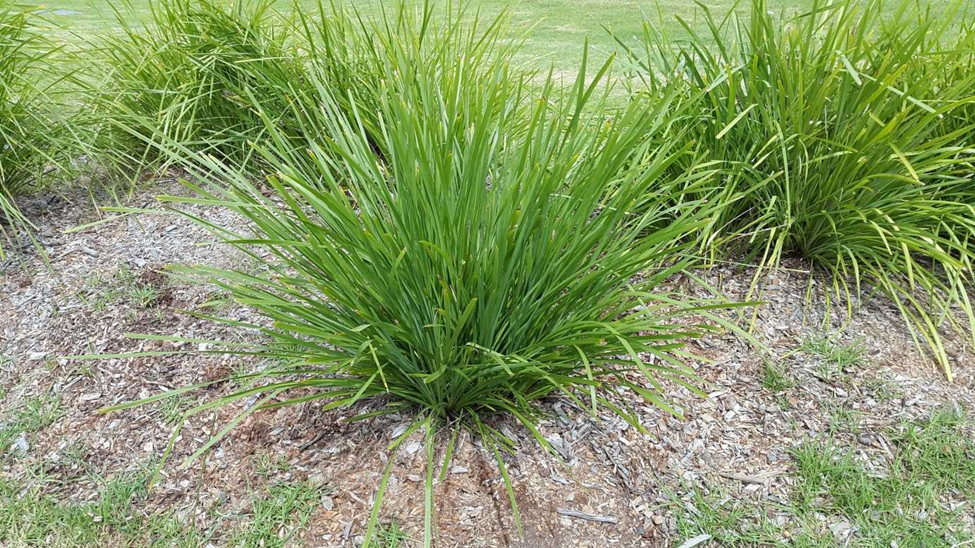
Mat Rush (Lomandra longifolia)
One of Australia's most dependable landscape plants.
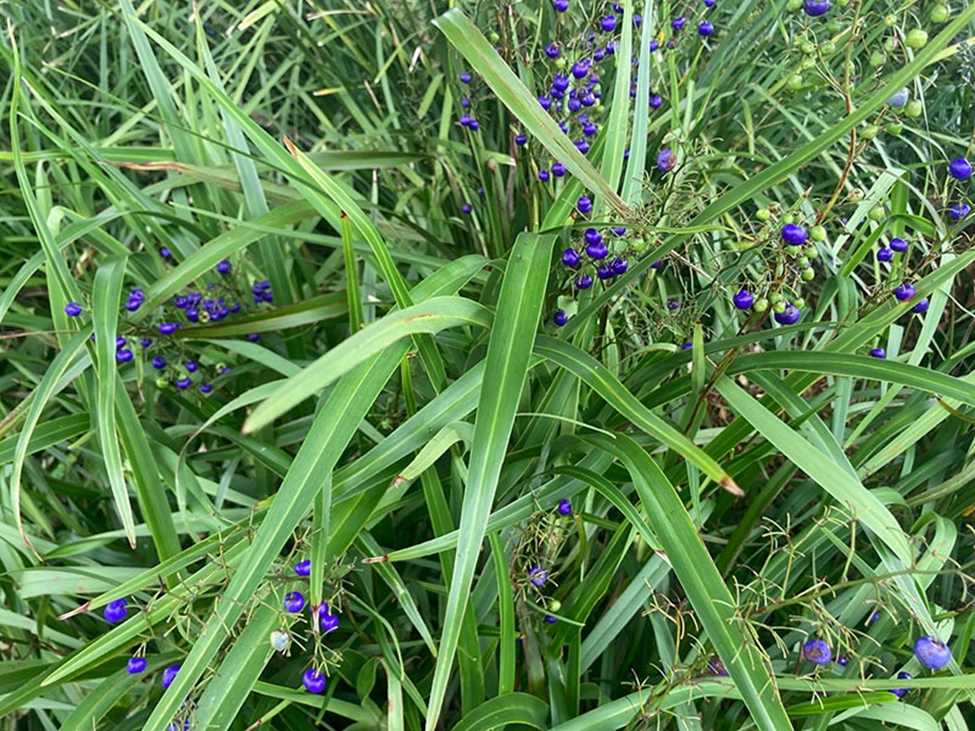
Native Flax Lily (Dianella caerulea)
Elegant foliage, attractive berries, and excellent versatility.
Tassel Grass (Poa labillardierei)
Provides movement and contrast against clipped hedges.
Kangaroo Grass (Themeda triandra)
Offers seasonal colour variation and a distinctly Australian character.
Shade-Loving Natives for Formal Gardens
Native Violet (Viola hederacea)
One of the best native groundcovers for shaded areas.
Blue Flax Lily (Dianella caerulea)
Reliable, tidy, and highly adaptable.
Native Gardenia (Atractocarpus fitzalanii)
Glossy foliage and beautifully scented flowers make this an elegant choice.
Cunjevoi (Alocasia brisbanensis)
Adds bold texture and tropical appeal to sheltered courtyards.
Creating an Australian Formal Garden
A truly successful formal garden isn't about copying European landscapes. It's about applying timeless design principles using plants that thrive in your local environment.
Imagine:
✔ Clipped Westringia hedges defining garden rooms
✔ Lilly Pilly topiary framing pathways
✔ Pleached Water Gums creating living walls
✔ Grass Trees standing as sculptural focal points
✔ Macrozamias adding symmetry and structure
✔ Dianella and Lomandra repeated throughout the garden
✔ Native Violets softening pathways and borders
The result is elegant, functional, water-wise, wildlife-friendly, and unmistakably Australian.
Final Thoughts
Formal gardens and Australian native plants are not opposites. In fact, they may be one of the most exciting combinations for modern gardeners.
By combining structure, repetition, symmetry, and carefully selected native species, you can create a garden that feels sophisticated while being better suited to Australia's unique climate and ecology.
Great garden design isn't about where a plant comes from. It's about how thoughtfully it's used.
With Australia's extraordinary native flora, the possibilities are far greater than many gardeners realise. 🌿🇦🇺
Choose plants that suit your climate, and the garden will do much of the work for you