Across the world, forests are disappearing faster than many of us realise. Scientists estimate that our planet has already lost around one-third of its forests, and here in Australia more than half of our native forests have been cleared in the past two centuries.
This loss isn’t just about trees. It affects wildlife, soil health, rainfall patterns, biodiversity and ultimately the stability of our climate.
Yet among these confronting facts there is also a powerful and hopeful story, one that shows how communities can restore landscapes and rebuild habitats.
And often, it begins with something simple.
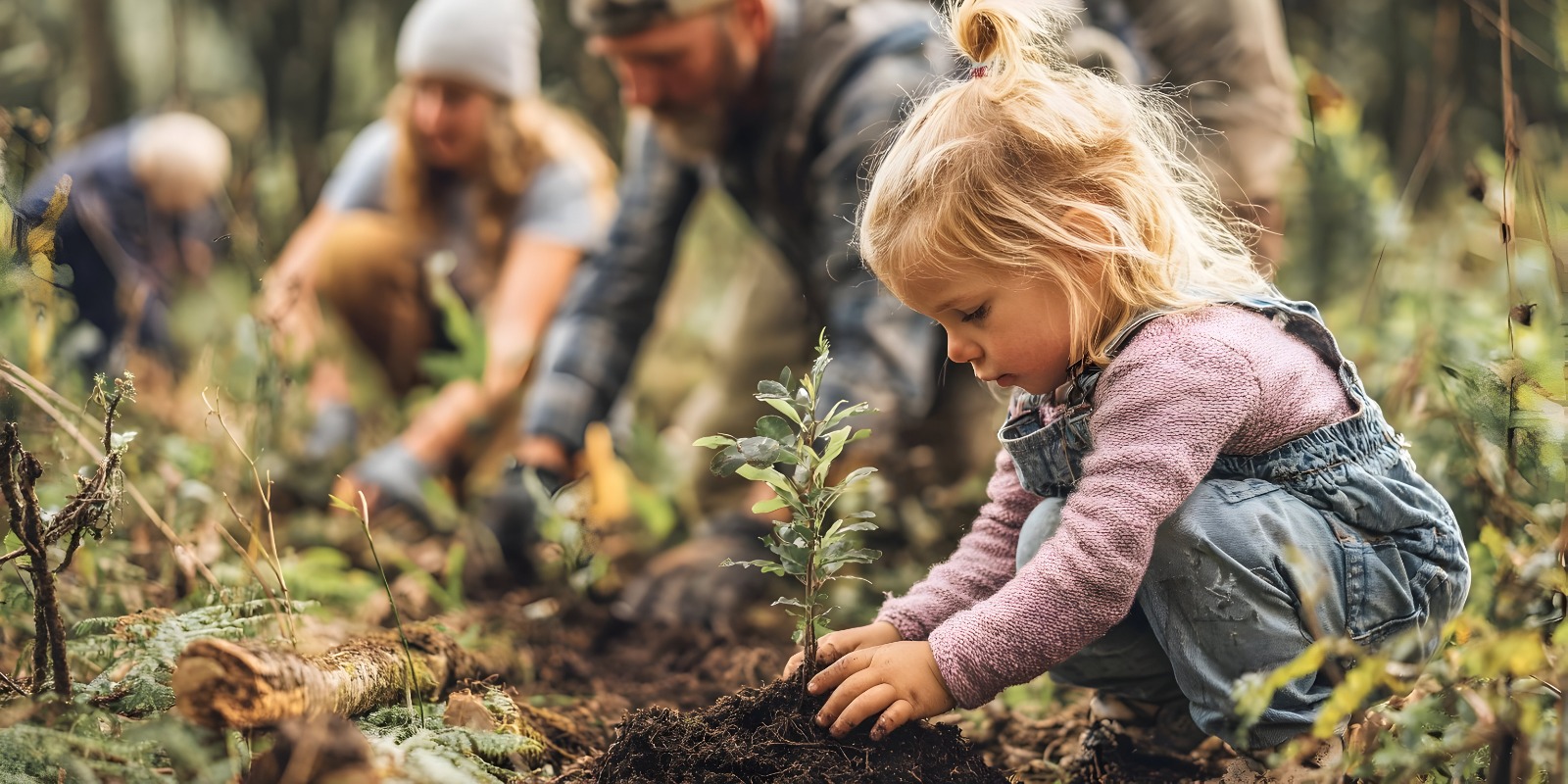
Planting a tree.
A Global Idea That Took Root in Australia

One organisation helping drive tree planting and habitat restoration in Australia is Trillion Trees Australia.
Since 1979, the not-for-profit organisation has brought communities together to restore degraded landscapes across Western Australia. With the help of volunteers, schools and local groups, they have planted more than 15 million native trees and understory plants.
But the inspiration behind this movement goes back even further.
The philosophy traces back to Richard St Barbe Baker - a forester and conservation pioneer often described as the world’s first global environmentalist.
While working in Kenya in the 1920s, Baker witnessed the devastating effects of deforestation. Land that had once been fertile forest had turned into degraded scrubland. To help restore the landscape, he worked with local communities to plant trees and promote sustainable land management.
In 1922 he founded a conservation movement called Men of the Trees, built around a simple but powerful idea:
“Restoring the land by planting and protecting trees.”
The movement eventually spread worldwide and inspired organisations like Trillion Trees Australia, which continues this work today.
What Restoration Really Looks Like

Tree planting is often imagined as volunteers digging holes and placing seedlings in the ground. While that’s certainly part of it, real habitat restoration is far more thoughtful.
Projects led by Trillion Trees focus on restoring entire ecosystems using native plants, rather than simply planting trees wherever space allows.
Their work includes restoring:
• Banksia woodlands on the Swan Coastal Plain
• Eucalypt woodland ecosystems in the Wheatbelt
• Wetlands and bushland habitats across Western Australia
Alongside restoration projects, the organisation runs a community native plant nursery in Hazelmere producing more than 200,000 native seedlings each year.
Many of these plants are used in restoration programs, while others are supplied to councils, landcare groups and home gardeners interested in growing Australian native plants.
Education is another major part of the mission. Through their SPROUT! schools program, students learn about ecosystems, seed propagation and environmental responsibility. Over the years, young people involved in the program have helped plant more than 2.5 million trees.
Why Trees Are One of Nature’s Most Powerful Tools
Healthy forests quietly perform an extraordinary number of ecological roles.
Trees help to:
• absorb carbon dioxide and produce oxygen
• stabilise soil and prevent erosion
• regulate local climate and rainfall
• support wildlife and pollinators
• filter pollutants from the air
• improve soil fertility through nutrient cycling
Simply put, trees help keep ecosystems functioning.
This is why tree planting in Australia isn’t just about greenery, it’s about restoring biodiversity and rebuilding habitats that many species depend on.
A Growing Restoration Movement
Across Australia, several organisations are working toward similar goals of reforestation and habitat restoration.
Groups such as Greening Australia, Landcare Australia, ReForest Now and Carbon Neutral are all helping communities plant trees, restore ecosystems and rebuild wildlife corridors.
Together, they demonstrate an important truth: environmental change rarely happens in isolation, it happens through collective effort.
What We Can Do Beyond Organisations

While large-scale restoration projects are essential, the future of our landscapes also depends on thousands of small actions taken by individuals.
Planting native plants in home gardens, supporting local nurseries, creating pollinator-friendly spaces and protecting existing trees all contribute to healthier ecosystems.
Even small gardens can become valuable stepping stones for wildlife.
Every native tree or shrub planted helps reconnect fragmented habitats and supports birds, insects and other species trying to survive in increasingly urban environments.
Growing a Greener Future with PlantArk
At PlantArk, we believe that restoring nature isn’t only something that happens in large conservation projects. It can also begin in backyards, community gardens and small plant nurseries. Across the PlantArk marketplace, growers and sellers are offering Australian native plants, seeds and seedlings that help people bring biodiversity back into their own spaces.
Choosing native plants isn’t just a gardening trend, it’s one of the most practical ways individuals can support habitat restoration and tree planting in Australia.
Native species are adapted to local conditions, support native wildlife and often require less water and maintenance once established.
Every native plant grown, shared or planted helps strengthen the connection between people and the landscapes we live in.
Because the truth is simple: Restoring nature isn’t only about planting millions of trees in remote landscapes. Sometimes it starts with one plant, one garden, and one person deciding to grow something that belongs.
And from there, change can spread just like seeds carried by the wind.
Watch: The Story of Trillion Trees Australia
https://www.youtube.com/watch?v=dfEMwrymzq0
Find out more information about Trillion Trees Australia at:
https://trilliontrees.org.au/